
Why Is My Outboard Losing Power? 7 Common Causes & How to Fix Them

Updated: Jun 16
Outboard Losing Power Under Load? Here's What May Be Causing It
Your outboard is running—but something isn't right. Maybe it won't reach full RPM, bogs down under load, or suddenly loses power while you're underway.
At Next Level Marine, power loss is one of the most common issues we diagnose on Suzuki, Yamaha, Mercury, Honda and Evinrude outboards. The good news is that many of these problems can be identified early before they become expensive repairs.
If your boat is losing power, here's what may be causing it—and what you can do about it.
Cause | Relative Frequency | Common Symptoms | Recommended Action |
Fuel System Issues | 40% | Bogging under load, surging, hard starting, loss of RPM | Inspect fuel filter, primer bulb, fuel lines, and fuel quality |
Ignition Problems | 20% | Misfires, rough running, poor acceleration | Check spark plugs, ignition coils, and plug wires |
Cooling System Failures | 15% | Overheating alarms, reduced power, limp mode | Inspect telltale stream, impeller, and thermostat |
Propeller Damage / Spun Hub | 10% | High RPM but little thrust, poor acceleration | Inspect propeller and test for hub slippage |
Electrical Faults | 10% | Intermittent power loss, warning lights, low voltage | Test batteries, charging system, and wiring |
Other Mechanical Isses | 5% | Knocking noises, low compression, persistent problems | Schedule professional diagnostics |
1. Fuel System Problems
Fuel-related issues are one of the leading causes of outboard power loss. Your engine may idle normally but struggle when accelerating because it can't get enough fuel under load.
Common fuel system issues include:
Clogged fuel filters
Water contamination
Ethanol phase separation
Kinked or deteriorated fuel lines
Air leaks in the fuel system
Blocked fuel tank vents
Quick Check:
Squeeze the primer bulb. It should become firm and stay firm. If it collapses, won't harden, or softens quickly, you may have a fuel delivery issue.

Pro Tip:
If your boat sits for extended periods, always use a marine fuel stabilizer to reduce ethanol-related problems.
2. Spun Propeller Hub
If your engine revs high but the boat barely accelerates, you may have a spun propeller hub.
The rubber hub inside the prop acts as a sacrificial component designed to absorb impacts. Hitting a sandbar, rock, or submerged object can damage the hub and cause it to slip.
Signs of a spun hub:
High RPM with low speed
Poor acceleration
Sudden loss of thrust
Engine sounds normal but boat won't plane
Quick Check:
With the engine off and in neutral, inspect the propeller for damage or unusual movement.
3. Ignition System Issues
A weak spark can rob your outboard of power without causing a complete failure.
Common ignition problems include:
Fouled spark plugs
Corroded plug wires
Faulty ignition coils
Loose electrical connections
Inspect Your Spark Plugs
Healthy spark plugs should appear light tan or gray.
Black and sooty: Rich fuel mixture or excessive trolling.
White or blistered: Lean running condition or overheating.
Damaged electrodes: Potential internal engine damage.
Replacing spark plugs annually is inexpensive insurance against performance issues.
Appearance | Condition | Likely Cause |
Light Tan / Gray | Healthy | Proper Combustion |
Black & Sooty | Rich Running | Excess fuel, excessive trolling |
White / Blistered | Lean Condition | Air leak or overheating |
Wet / Oily | Oil Fouling | Internal engine wear |
Metal Deposits | Sever Overheating | Possible piston damage |
4. Overheating & Cooling System Failures
Modern outboards rely on raw water cooling. If cooling flow is restricted, the engine may overheat and enter protection mode.
Check the telltale stream:
Your telltale (or "pee stream") should be strong and consistent.
A weak stream may indicate:
Clogged water intakes
Failed impeller
Stuck thermostat
Debris in cooling passages
Impeller Maintenance Matters
At Next Level Marine, we recommend replacing water pump impellers every 2 years or according to manufacturer recommendations.
Ignoring impeller maintenance is one of the fastest ways to create expensive engine damage.
5. Air Intake Restrictions
Your engine needs clean air just as much as it needs fuel.
Restricted airflow can cause:
Hesitation
Loss of power
Rough idle
Poor fuel economy
Inspect:
Air filters
Flame arrestors
Intake passages
Carbureted engines are especially susceptible to varnish buildup from old fuel.
6. Electrical Problems
Electrical issues are increasingly common on modern boats.
Low voltage, corroded connections, or failing sensors can reduce engine performance or trigger alarms.
Common electrical issues include:
Weak batteries
Corroded terminals
Faulty sensors
Loose grounds
Charging system failures
Battery Check:
Before heading out:
Clean battery terminals
Verify charging voltage
Inspect grounds and wiring connections

Many "engine problems" turn out to be electrical issues.
7. Engine Protection Mode (Limp Mode)
Modern outboards are designed to protect themselves.
When a critical issue is detected, the engine may enter limp mode and limit RPM.
Common triggers include:
Overheating
Low oil pressure
Sensor failures
Electrical faults
Limp Mode Warning Guide:
Warning | Possible Cause | Action |
🌡️ Overheat Alarm | Failed impeller, clogged intake | Shut down engine and inspect cooling system |
🛢️ Low Oil Pressure | Low oil or sensor issue | Check oil level immediately |
🔋 Battery Warning | Charging system failure | Test battery and alternator |
⚠️ Check Engine | Sensor fault or engine issue | Read diagnostic codes |
📉 Reduced RPM | Engine protection mode activated | Diagnose underlying cause |
Signs of limp mode:
Engine won't exceed 2,000–3,000 RPM
Warning lights or alarms
Sudden reduction in power
Diagnostic equipment is often required to read fault codes and determine the cause.
Quick Diagnostic Checklist:
Before scheduling service, check the following:
Item to Check | What You're Looking For |
Primer Bulb | Firm and stays hard when squeezed |
Fuel Filter | No water, debris, or discoloration |
Spark Plugs | Light tan or gray color |
Battery Voltage | 12.6V+ engine off; 13.5–14.5V running |
Telltale stream | Strong, consistent flow |
Propeller | No bent blades or fishing line |
Warning Lights | No alarms or fault indicators |
Fuel Quality | Fresh fuel with stabilizer |
Sometimes the fix is simple. Other times, early diagnosis can prevent major repairs.
When Should You Call a Marine Mechanic?
If you've checked the basics and your outboard still loses power, professional diagnostics may be needed.
Contact a marine technician if you experience:
Persistent power loss
Engine alarms
Overheating
Misfires
Unusual noises
Low compression
Electrical faults
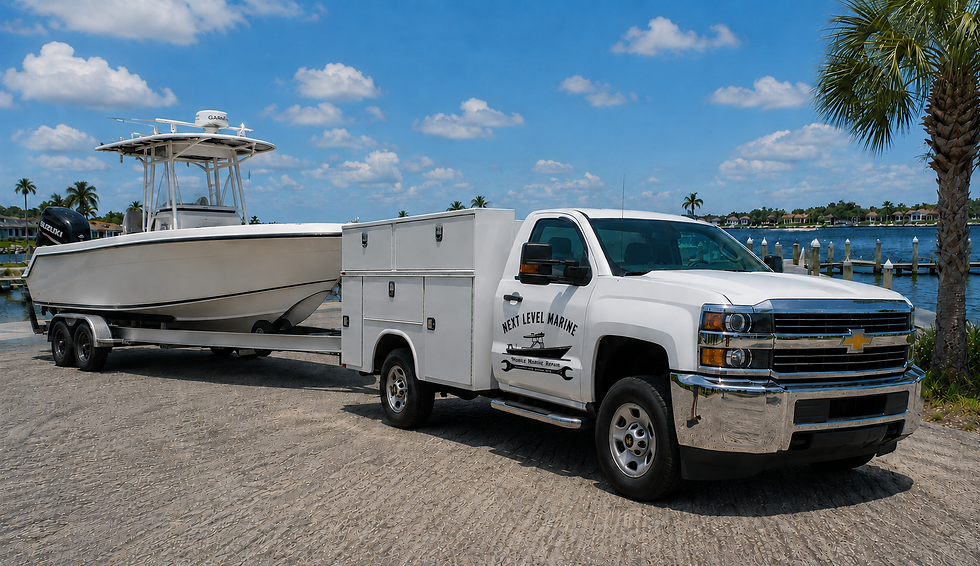
At Next Level Marine, we provide mobile marine diagnostics and repair services directly at your dock, marina, or driveway—saving you the hassle of transporting your boat.
Keep Your Outboard Running Strong
Routine maintenance is the best defense against power loss.
Regular service items include:
Fuel filter replacement
Spark plug replacement
Impeller service
Battery inspections
Diagnostic scans
Whether you run a Suzuki, Yamaha, Mercury, or Evinrude, or another engine brand preventive maintenance keeps you on the water and reduces costly repairs down the road.
Need help diagnosing an outboard that's losing power?
Contact Next Level Marine today for professional mobile marine service and diagnostics.


.png)
Comments